
Why Amish Furniture Costs More and What Makes It Worth It
A dresser can look beautiful in a photo. You learn more about it when you open a fully loaded drawer and see how smoothly it moves. With a bed, look at how the rails connect to the headboard and what supports the mattress. With a dining chair, sit down and see how the back feels and whether the frame feels steady. Those everyday details are where the cost of good furniture starts to make sense.
What goes into the price
Selecting hardwood takes an experienced eye. Before making a cut, the builder considers which parts will carry weight, where the joints will go, and how the grain and color will read across the finished piece. A bed rail needs sound hardwood with straight grain where it joins the posts. On a dresser, the builder can cut neighboring drawer fronts from the same section of hardwood so the grain and color flow across the face. Black walnut’s deep tones and hickory’s bold grain give each piece a different character. The price reflects the species, how much of the hardwood can be used for those parts, and the time it takes to select and match it.
Then there’s the work you rarely see in a product photo. A dining chair has joints that need to hold up as people shift their weight. A bookcase needs shelves sized and supported for the load they’ll carry. With an upholstered sofa, part of the price is under the fabric. Ask how the frame is joined, what supports the seat, and what’s inside the cushions. Each kind of furniture asks something different of the builder.
How it compares with lower-priced, mass-produced furniture
A factory can lower its cost per piece by making large runs of the same design. Some budget dressers and bookcases use printed laminate over particleboard in places where a hardwood piece uses solid lumber. A wood-look surface can photograph well, but damage that goes through the surface can be hard to blend. Depending on the depth of the damage and the finish, a solid hardwood surface can often be repaired or refinished.
When you compare prices, ask which parts are solid wood, how the moving parts work, and what can be serviced later. A dresser you open every morning, a sofa you sit on every evening, and a table you extend every holiday each give you a different way to judge whether the extra cost is worth it.
What generations of practice bring to the finish
A local woodworker can make a beautiful one-of-a-kind piece. Finishing a whole bedroom or dining set consistently takes another level of practice, and the results vary by shop. Ask to see finished work in the wood you’re considering. Look at a dresser’s drawer fronts in angled light, feel the edges around a headboard, and compare the color and sheen across a set of chairs. It’s easier to judge the finish on several completed pieces than on a small sample.
In Amish shops where furniture making has passed from one generation to the next, builders pass down practical judgment along with the designs. They learn how to prepare different woods for stain, fit a cabinet door so the gaps are even, and make a chair feel comfortable without sacrificing strength at the joints. Years of building and finishing furniture show up in how consistently those details come together.
Why a discount is a poor starting point
There are deals out there. A hardware store or other retailer may have an auction-sourced piece offered at a lower price. It might be used or refurbished, so ask about its condition and what work has been done. If it came in as a single piece, the store may have no way to order matching nightstands for the bed or two more chairs for the dining set. The price is for that particular piece, in the size, finish, and condition it comes in.
With a made-to-order piece, the builder still has to select the lumber, build it to the agreed specifications, and finish it. Those costs are part of every new order, which is why you shouldn’t build your budget around a markdown. Start with what you want to use every day and ask for a quote on that piece. If the price is above your budget, ask about the builder’s standard dresser layout, another offered fabric for the sofa, or a different hardwood on the same design. That gives you a way to make the piece work for your budget while keeping the details you care about most.
See and feel the difference for yourself
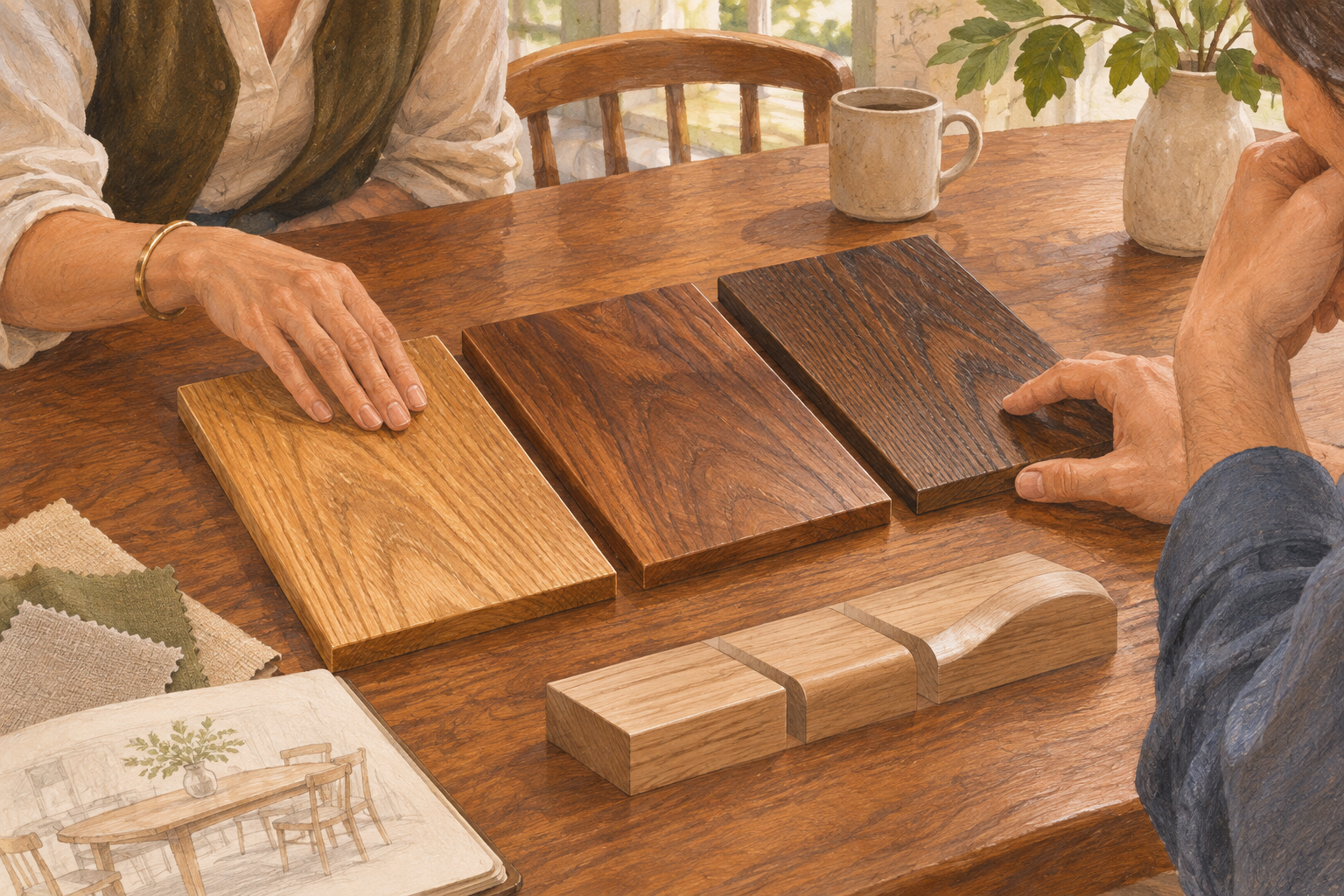
Bring your room measurements and budget to Amish Home Furniture at 1839 Blue Ridge Hwy in Blairsville or 10 Northside Square in Ellijay. We’ll show you how the pieces are built, put woods and finishes side by side, and help you price the options that matter for your home.